

 Spend
Spend 


How to wash your car properly
A proper wash isn't just about making your car look clean. It's about protecting the finish every single time you pick up a wash mitt.
If there's one detailing process that deserves your attention, it's the wash stage. Get it right and every other stage becomes easier. Get it wrong and you can spend hours polishing paint that didn't need correcting in the first place. The biggest misconception in detailing is that swirl marks appear over time. They don't. Most of them are created while you're washing and drying your car. Every time dirt is dragged across the paint, those tiny particles act like sandpaper. They leave behind thousands of microscopic scratches that dull the finish and rob the paint of its clarity. The good news is that avoiding them isn't difficult. It simply comes down to following the correct process. This is the exact washing routine we've followed at Auto Finesse since 1999. It's the same method we've used on daily drivers, concours winners, show cars, supercars and everything in between. Whether you're giving your commuter its weekly clean or preparing your pride and joy for a full detail, these are the steps we recommend every single time.
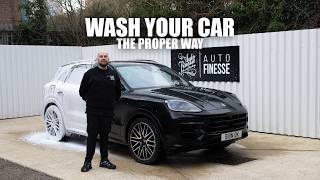
People often assume polishing damages paint. It doesn't. Washing does. The wash stage is where the majority of swirl marks are created because this is the point where dirt is physically moved across the surface. Think about it. Road grime contains grit, brake dust, sand, salt and countless other contaminants. If those particles aren't removed before your wash mitt touches the paint, they become trapped between the mitt and the panel. Every movement then drags them across the clear coat. That's where swirl marks come from. The goal of washing a car properly isn't simply getting it clean. The goal is to remove as much contamination as possible before you ever touch the paintwork. Touch the paint less. Move less dirt around. Create fewer scratches. Everything in this guide is built around that philosophy.
Step 1 - Start with the wheels.
The wheels are almost always the dirtiest part of the vehicle. They're constantly exposed to brake dust, road salt, tar and heavy road grime, so it makes sense to tackle them first. One of the biggest mistakes people make is soaking the entire car before they've even started on the wheels. It sounds logical. It isn't. By the time you've finished cleaning four wheels, water has already begun drying on the paintwork, especially during warmer weather. Worse still, you're likely to splash brake dust and dirty water back onto panels you've already rinsed. Instead, keep the bodywork completely dry and concentrate solely on the wheels. Take your time. Modern alloy wheel designs often have tight spokes, deep barrels and awkward corners that all need attention. A rushed wheel clean always shows.


Our Wheel Cleaning Process Start by applying a dedicated wheel cleaner across the entire wheel. Don't just spray the visible face. Cover the barrel first before working around the wheel from the twelve o'clock position in a clockwise direction until every surface has been coated. Allow the cleaner to begin breaking down brake dust before rinsing away as much contamination as possible with a pressure washer. Only once you've removed the loose dirt should you introduce your brushes. Work in this order:
- Clean the barrel first.
- Move onto the wheel face.
- Agitate around the spokes.
- Clean the lug holes and awkward corners with a detailing brush.
- Rinse thoroughly. Working methodically means you never miss an area.


Why We Always Rinse Before Brushing
This is one of the easiest ways to reduce scratching. If you immediately start brushing a wheel that's heavily contaminated, you're simply grinding brake dust against the finish. Removing as much loose dirt as possible beforehand allows your brushes to do their job safely.


Step 2 — Clean The Tyres And Wheel Arches
Once the wheels are clean, don't move on just yet. Take advantage of the fact you're already working around the wheel. The tyre walls and wheel arches deserve attention too. Tyres collect just as much dirt as the wheels themselves, yet they're often ignored. Cleaning the rubber removes old tyre dressing, road grime and browning, leaving a fresh surface whether you prefer a natural look or plan to apply a dressing afterwards. It also dramatically improves how well tyre dressings bond to the rubber, meaning they last longer and produce a more even finish. Spray an all-purpose cleaner onto the tyre wall and arch liner before scrubbing thoroughly with a dedicated tyre brush. Rinse everything clean. Now your wheels, tyres and arches are finished before you've even touched the paintwork.
Step 3 — Remove As Much Dirt As Possible Before You Touch The Paint
This is arguably the most important stage of the entire wash. Most people skip it. Don't. The less dirt your wash mitt has to deal with later, the safer your wash becomes. Start by applying a citrus pre-wash to the areas that accumulate the heaviest contamination. Focus on:
- Front bumper
- Lower doors
- Side skirts
- Rear bumper
- Wing mirrors Anywhere that catches road grime deserves extra attention. The pre-wash begins loosening traffic film before the snow foam is applied. It's working before you've even reached for your wash mitt.


Why This Matters
Every bit of dirt removed during the pre-wash stage is one less particle your wash mitt has to drag across the paint. That's exactly how swirl marks are prevented.


Citrus Power Pre Wash
Citrus Power bug & grime remover is a versatile citrus pre-wash an essential that no car detailing kit should ever be without. Designed to aid the perfect s... See product details More
Step 4 — Cover The Car In Snow Foam
With the citrus pre-wash applied, it's time for snow foam. One of the biggest misconceptions about snow foam is that it's the foam itself doing the cleaning. It isn't. The foam acts as a blanket. Its job is to keep the detergent on the paintwork for longer. Longer dwell time means the cleaning agents have more time to soften and break down dirt without relying on harsh chemicals. That's why a quality pH neutral snow foam is so effective. It allows gentle cleaning without stripping protection or attacking delicate trim. Apply the foam generously over the entire vehicle and leave it to dwell for as long as possible without allowing it to dry. Cool, overcast weather is ideal because it gives the detergent more time to work. Patience here pays off.


Why We Don't Use Harsh Traffic Film Removers
Traffic film removers work quickly because they're aggressive. Snow foam works differently. Rather than relying on stronger chemistry, it relies on longer contact time. That makes it far kinder to coatings, waxes, trim and sensitive finishes while still delivering excellent cleaning performance.


Avalanche Snow Foam
Capable of removing traffic films and breaking down dirt and road grime, Avalanche Snow Foam encapsulates sharp particles safely trapping it in the foam, allowi... See product details More
Step 5 — Rinse From The Top Down
You'll hear plenty of people recommend rinsing upwards. We don't. Gravity already works in your favour. Start on the roof. Allow the water to carry loosened contamination down the vehicle and onto the ground where it belongs. Working upwards simply pushes dirt into panel gaps, trims and areas you've already cleaned. Start high. Work low. Keep flushing contamination away from the vehicle. By the time you've finished, you'll have removed the vast majority of loose dirt without ever touching the paint.


Step 6 — The Two Bucket Wash
Now — and only now — should your wash mitt touch the paint. Use two buckets. One contains clean shampoo solution. The other contains plain water for rinsing. Keep your shampoo bucket closest to the vehicle. It sounds like a tiny detail, but it means you always know which bucket you're reaching for. Wash a section. Rinse the mitt. Reload with fresh shampoo. Repeat. Simple. Effective. Safe.
Never Use A Sponge
A quality microfiber wash mitt traps dirt deep within its fibres. A sponge doesn't. Instead, it keeps contamination flat against the paint, increasing the chance of dragging grit across the surface. A wash mitt is simply the safer choice.
Step 7 — Wash From Cleanest To Dirtiest
Always wash the cleanest areas first. Break the vehicle into three sections.
- Roof and upper panels.
- Glass and middle sections.
- Lower panels. Those lower areas are where the majority of contamination sits. Leave them until last. Once you've completed a section, rinse your mitt before loading fresh shampoo. Repeat this process until every panel has been cleaned. Methodical. Consistent. Safe. Every single wash.


Step 8 — Don't Miss The Details
This is where good details become great ones. The little areas are the ones people notice. Take an extra few minutes and clean:
- Windscreen wiper blades.
- Underneath the wiper arms.
- Under door handles.
- Under wing mirrors.
- Exhaust tips.
- Door shuts.
- Wheel arch lips. These areas don't take long. But missing them instantly makes an otherwise clean car feel unfinished.


Step 10 — Finish The Job
Once the paintwork is dry, don't forget the wheels. Dry them using a separate microfiber towel. This prevents water spotting while giving you one last opportunity to spot anything you've missed. Finish by:
- Applying a water-based tyre dressing.
- Dressing the wheel arches if required.
- Cleaning every piece of glass inside and out. Only then is the wash complete.
Step 9 — Dry The Car Properly
The drying stage causes more swirl marks than most people realise. A poor-quality towel. A towel that's been tumble dried. Dragging a dry towel over dry paint. These are all common mistakes. Instead, lightly mist a quick detailer across each panel before drying. This creates lubrication between the towel and the paint, allowing it to glide rather than drag. You'll also notice better gloss and fewer water spots. Use a large, high-quality microfiber drying towel and allow it to absorb the water rather than aggressively rubbing the paintwork.


Washing Your Car Properly Is The Foundation Of Every Great Detail
Whether you're planning to clay, polish or protect your paint, everything starts with a proper wash. Removing as much contamination as possible before touching the paint. Working methodically. Using the right tools. Taking your time. Follow this process every time you wash your car and you'll dramatically reduce the chance of introducing swirl marks, keeping your paintwork looking glossier for longer while making every future detailing job easier. Good detailing doesn't start with polishing. It starts with washing properly.
Continue exploring.
Explore Detailing Guides- Tags: The Basics


